
TMS is not just Route Planning: Which TMS capabilities you are still not using?
Most people still associate a Transportation Management System (TMS) with one core function: route planning. And it was true for a long time, it was the most noticeable use case, the easiest to demonstrate, and the first to be explored after go-live.
But that view limits the return on investment. And in practice, it leaves the platform’s most strategic capabilities completely idle.
After working with Blue Yonder TMS across some logistics operations, I can say with confidence: route planning is just the tip of the iceberg. We have available modules such as: tariff management, load consolidation, real-time visibility, system integration, and freight analytics and combining all of them is where the platform truly transforms the operation.
Tariff Management
One of the most underestimated functions of a TMS is the ability to centralize and manage all freight contracts with carriers in a single place. In practice, this means the system automatically applies the correct rate for each combination of lane, mode, equipment type, and carrier, this being the starting point, having an diverse option of filtering and personalization eliminating the manual effort of consulting spreadsheets and the human error that comes with it.

Freight Audit
Comparing what was contracted against what the carrier actually charged. In high-volume operations, billing discrepancies are more common than they appear, generating invisible financial losses that go unnoticed without a structured reconciliation process.
Load Consolidation Optimization
This is arguably the greatest value generator in the TMS, and also the most complex to configure along with the business needs. Consolidating loads is not simply grouping two or more shipments onto the same truck. It is an optimization problem involving multiple simultaneous variables, such as:
- Maximum equipment Dimensions, each vehicle type has a capacity that cannot be exceeded, does the cargo physically fit? Can we split an order into multiple compartments? Is cheapest to send multiple small equipment or a big one?
- Delivery time windows, are the destinations compatible in terms of timing? Can this shipment be delivered on time? Is the customer available all to receive it? Do we have enough resources?
- Operational restrictions, are there incompatible products? Temperature requirements? Route constraints?
When handled manually by a logistics analyst, this process takes hours and still produces non-optimal results. TMS executes this optimization in seconds, considering all configured constraints and seeking the best balance between cost and service level. Is very common to have a result that does not align the usual planning and when the analyst compares the results, they can find an optimal result from BY considering business rules and configured parameters.
The direct result is a reduction in cost per delivery without compromising agreed customer deadlines as the quality of the optimization depends directly on the quality of the configuration. Weight parameters, tariff restrictions, and equipment definitions must accurately reflect operational reality. An incorrect configuration can generate non-optimal consolidations.
Traceability
In logistics operations, delayed information has the same practical effect as no information at all as you will only react to issues when it is already late. The TMS changes this logic by centralizing the status of every shipment, at every stage of the supply chain, with every carrier in real time, if integrated. This enables:
- Identifying delays before they become delivery failures
- Activating contingency plans
- Proactively communicating with the customer when there is a schedule deviation
- Reducing the volume of tracking calls and emails that consume the operational team’s time
Integration with ERP, WMS, and Carrier Portals
The TMS does not exist in isolation. A well-structured integration connects the sales order (ERP) to the picking plan (WMS), to the shipment scheduling (TMS), to delivery tracking (carrier portal), and to financial closing (invoicing payable) with no manual data entry between steps. The practical impact is the elimination of rework, reduction of data errors, and acceleration of the entire logistics cycle. Every integration point that still relies on manual intervention is a point of operational risk.
Freight Analytics and Intelligence
Finally, the TMS is a rich data source that, when properly explored, transforms the transportation function into a center of strategic intelligence. With consolidated historical data in the platform, it becomes possible to analyze:
- Freight cost trends, by lane, mode, carrier, and period.
- Carrier performance in terms of on-time delivery, incidents, and service quality.
- Contract renegotiation opportunities, based on actual volume and historical performance.
- Demand trends that feed capacity planning.
These analyses elevate the transportation team’s view and capabilities of making decisions.
TMS as a Competitive Advantage
A TMS, when properly leveraged, solves how to run transportation at lower cost, with greater visibility, and with better customer experience. That’s why constants reviews are important to check TMS health within business needs to achieve better results. Also, having an open-minded team helps to restructure process and implementation of new modules.


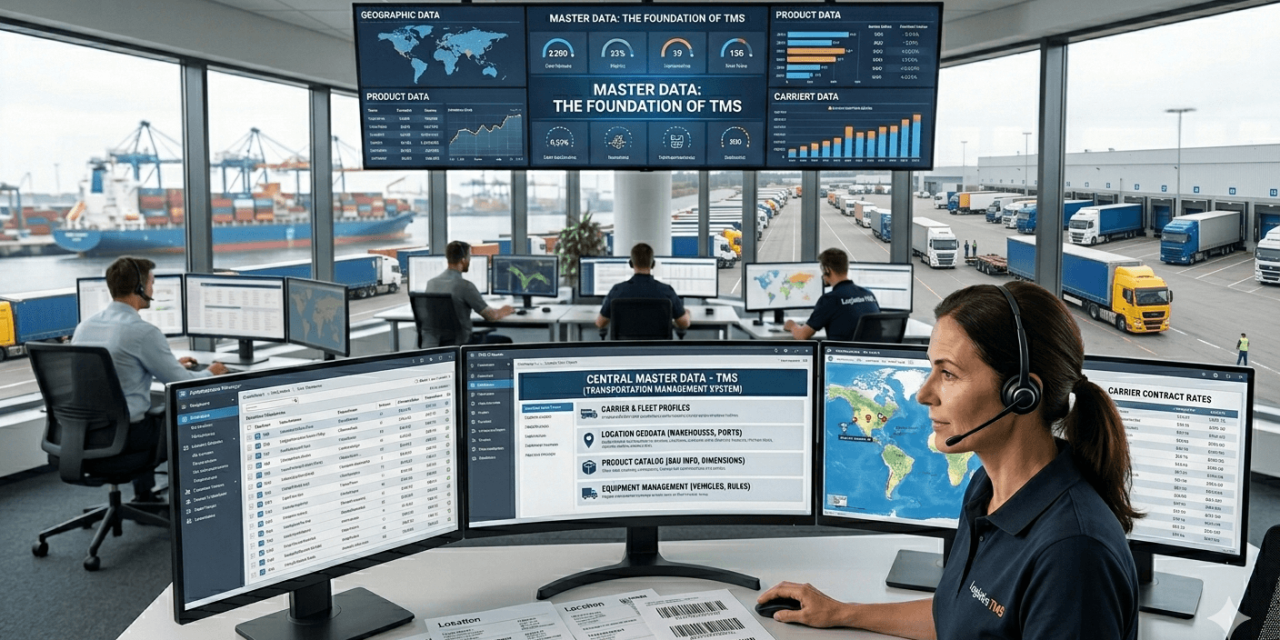
Start the digitisation of your supply chain with the help of our team of accredited solution architects and consultants, who will be supporting your TMS project with implementations, global roll-outs, migrations and upgrades, quick-wins, extended support and trainings.
